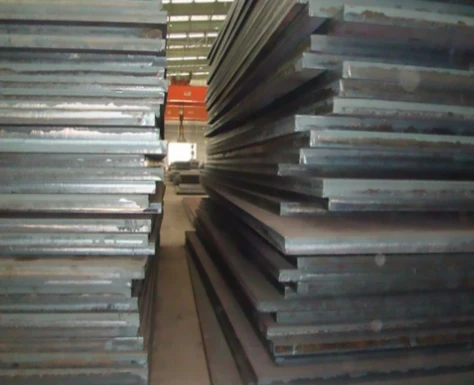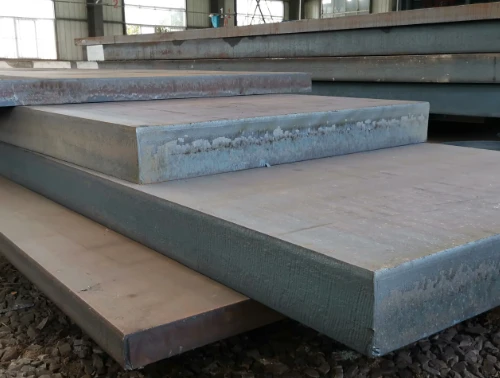
ASTM A387 Grade 22 is the 2.25Cr-1Mo workhorse of heavy petrochemical equipment: hydrogenation reactors, hydrocracker shells, coal chemical vessels and high-temperature boiler drums - the applications where temperature, hydrogen pressure and design life all push against ordinary alloy plate at once. It carries more chromium and molybdenum than Grade 11, holds strength to roughly 600 degrees Celsius, and is the grade behind most code calculations for severe hydrogen service. This page is written for the buyer side of that decision: what the chemistry buys you, how Class 1 and Class 2 differ, what heat treatment and PWHT documentation the mill must supply, and the fabrication disciplines that separate a clean Cr-Mo order from a rework loop.
What the 2.25Cr-1Mo Chemistry Buys
Grade 22's alloy set does three jobs that carbon and low-alloy plate cannot. Chromium at about 2.25% resists hydrogen attack and hydrogen-induced surface decarburisation - the failure mode that governs reactor shell life in hydrogenation service. Molybdenum at about 1% provides the creep strength that keeps yield values stable during decades at 450-600 degrees Celsius. And the combined carbide structure resists graphitisation and hydrogen embrittlement under the operating cycles of hydroprocessing units. The practical selection line: below roughly 450 degrees and mild hydrogen duty, A387 Grade 11 does the job cheaper; at the top of the Cr-Mo temperature band and in severe hydrogen service, Grade 22 is the specified answer, and API 941 (Nelson curves) is the document that decides it for hydrogen units.
Chemistry and Mechanical Properties
| Item | A387 Gr 22 typical requirement | Buyer note |
|---|---|---|
| Carbon (C) | 0.15% max (ladle, Class dependent) | Weldable with matching Cr-Mo filler, preheat mandatory |
| Chromium (Cr) | 1.88 - 2.62% | Hydrogen attack resistance per API 941 duty |
| Molybdenum (Mo) | 0.87 - 1.13% | Creep strength to about 600 degrees C |
| Yield, Class 1 | 205 MPa min (t ≤ 25 mm) | Normalized or normalized + tempered |
| Yield, Class 2 | 310 MPa min (t ≤ 25 mm) | Normalized + tempered; Q+T by agreement |
| Tensile, Class 2 | 515 - 690 MPa | Certificates state tested heat values, not minimums |
Table note: requirements per ASTM A387/A387M thin-plate band; heavier sections carry reduced minimums - quote the exact gauge for code calculations.
Class, Heat Treatment and PWHT Documentation
Grade 22 follows the same Class 1 / Class 2 structure as the rest of A387: Class 1 normalized (or N+T) at the lower strength band, Class 2 normalized and tempered at the higher one, quenched and tempered by agreement for heavy sections where through-hardening matters. The documentation buyers actually get audited on is the PWHT side. Fabrication of a code vessel ends in a stress relief cycle near 690-720 degrees Celsius for this grade, and the mechanical properties that matter at service are the ones after that cycle - which is why simulated PWHT coupons exist. Order them: coupons heat-treated at your fabrication PWHT cycle (or the code's longer simulation) prove the plate's tempering stability before a single shell is rolled. Our production confirms the mill tempering window against your PWHT temperature before the order is released, so the two heat treatments do not fight each other. Post-PWHT hardness control in the HAZ then stays a fabrication discipline rather than a plate problem.
Sizes and Delivery Condition
| Dimension | Typical range | Notes for buyers |
|---|---|---|
| Thickness | 6 - 150 mm | Reactor shells above 100 mm run mill production, allow 3-5 weeks |
| Width | 1500 - 4020 mm | Shell-can layouts nested from the cutting plan |
| Length | up to 14000 mm | Heavy plates ship breakbulk with lifting points marked |
| Condition | normalized; N+T; Q+T by agreement | Simulated PWHT coupons and step-cooling tests on request |
Table note: routine mill ranges; UT to ASTM A578 level as specified, Z15-Z35 through-thickness packages and impact testing at minimum design temperature available against project documents.
Fabrication Disciplines That Matter
Three disciplines decide a Grade 22 order at the fabricator. Welding: matching 2.25Cr-1Mo filler (E9018-B3 class), preheat around 200 degrees, interpass control, and no carbon steel habits - Cr-Mo weld metal that cools too fast cracks, not leaks. PWHT: the vessel code cycle near 690-720 degrees with controlled heating and cooling rates; combine it with the simulated coupons from the mill so the property trail runs unbroken from heat number to finished shell. Hydrogen-out: for severe hydrogen service, agree bake-out and hardness survey procedures up front with the inspection authority. Piping loops that connect to Grade 22 vessels carry their own specification - for the carbon steel side of the plant, see our ASTM A106 seamless carbon steel pipe page, and for the room-temperature vessel plates behind the same walls, the ASTM A516 Grade 70 page documents the carbon workhorse.
Where Grade 22 Sits Against the Alternatives
Within one procurement basket the choice usually narrows to three plates: Grade 22 for the hot, hydrogen-heavy vessels; Grade 11 for the moderate Cr-Mo equipment around them; and for European-standard boilers and vessels up to about 480 degrees, 16Mo3, which welds and PWHTs more simply than either Cr-Mo grade. If the project mixes ASTM and EN documents, map the equivalent with certificates rather than by name - a "16Mo3 equivalent" that carries no 3.1 certificate is not an equivalent. Send the design documents through our contact page and we will confirm grade, class, heat treatment and test package against the governing code before quoting.
Frequently Asked Questions
When does hydrogen service require Grade 22 instead of Grade 11?
Follow API 941. The Nelson curves plot hydrogen partial pressure against operating temperature; where the operating point sits above the Grade 11 curve but below Grade 22, the upgrade is mandatory - this is typical of hydrocracker and hydrotreater loops.
Do you provide simulated PWHT coupons for Grade 22?
Yes, including step-cooling simulations for embrittlement assessment where the project requires them. State the fabrication PWHT cycle with the RFQ so coupon heat treatment matches the vessel's actual cycle.
What is the maximum recommended service temperature?
Grade 22 holds useful strength to roughly 600 degrees Celsius, which is the top of the standard Cr-Mo band; beyond that the project moves to advanced grades (2.25Cr-1Mo-V, 9-12Cr) outside this page's scope.
Can reactor-shell plates be supplied Q+T?
Yes - quenched and tempered delivery by agreement, typically for heavy sections where the code calculation needs the higher through-thickness strength. Confirm the Q+T tempering temperature against your PWHT plan before release.
Hot Tags: astm a387 grade 22 steel plate, a387 gr22 class 2, 2.25Cr 1Mo steel plate, hydrogen service pressure vessel plate, a387 gr22 China supplier, alloy steel plate price