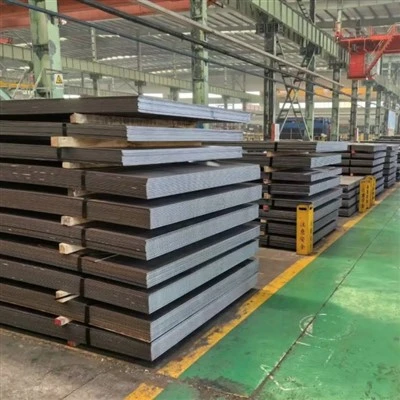
Carbon steel plate is a metal plate with iron and carbon as its main components, of which the carbon content is usually between 0.0218% and 2.11%. The difference in carbon content within this range will significantly affect its properties such as strength, hardness and toughness. For example, when the carbon content is higher, the hardness and strength will be improved.
Carbon steel plate is a carbon steel material. According to the national standard GB/T 699-2015, it includes a variety of types with different quality grades and uses. For example, ordinary quality carbon steel is often used for general structural parts. From the perspective of metallographic structure, carbon steel plate is mainly composed of ferrite and cementite at room temperature. The different proportions of the two determine the basic properties of carbon steel plate. For example, carbon steel plate with a high ferrite content has better plasticity and toughness.
Carbon steel plate is a basic metal material widely used in the industrial field. According to the smelting method, it can be divided into open-hearth steel, converter steel, etc. The quality of open-hearth steel is relatively stable. Impurity elements such as sulfur and phosphorus in carbon steel plates have a significant impact on their performance.
Excessive sulfur content will lead to hot brittleness, while excessive phosphorus content will cause cold brittleness. High-quality carbon steel plates have strict control over these impurity elements. Carbon steel plates are divided into thin plates, medium plates and thick plates according to their thickness. The thickness of thin plates is generally between 0.2mm and 4mm, and they are often used in the manufacture of automobile body panels. When carbon steel plates are in the hot-rolled state, their microstructure will form rolling streamlines. These streamlines have a directional effect on the mechanical properties of carbon steel plates. For example, the tensile strength along the rolling direction will be higher. The performance of carbon steel plates can be further improved through heat treatment processes such as quenching and tempering. For example, after tempering treatment, the comprehensive mechanical properties of carbon steel plates, such as strength and toughness, can achieve a better balance. The surface quality of carbon steel plates is also very critical. Good surface quality can reduce defects in subsequent processing. In some application scenarios that require painting, there are strict requirements for surface roughness.
The weldability of carbon steel plates is closely related to their carbon content. Generally speaking, the lower the carbon content, the better the weldability. This is an important consideration in the welding construction of building steel structures.