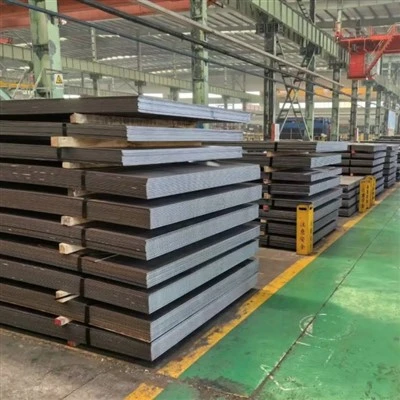
Carbon steel is an iron-carbon alloy with a carbon content between 0.0218% and 2.11%. It is also called plain carbon steel. It typically also contains small amounts of silicon, manganese, sulfur, and phosphorus. Generally, higher carbon content in carbon steel increases hardness and strength, but also reduces plasticity.
High-quality carbon steel must be produced through an open-hearth smelting process, which is different from the converter-produced process for ordinary carbon steel. Its typical application is in the manufacture of important mechanical parts such as automobile housings and instrument housings . Its core manufacturing process includes: Precise carbon content ratio in the raw material pretreatment stage Deoxidizer is used to enhance deoxidation during the smelting process Normalizing or annealing heat treatment must be carried out after forming The final product must pass dual tests of mechanical properties and chemical composition The heat treatment process can improve the ductility of the material, making its elongation 15%-20% higher than that of ordinary carbon steel, but the tensile strength is reduced by about 10% accordingly.
Carbon steel has the following characteristics:
High Strength: Because carbon steel has a higher carbon content than ordinary steel, it is also stronger.
Good Toughness: Carbon steel can withstand significant deformation and extrusion without breaking easily.
Good Weldability: Carbon steel can be joined using various welding methods, resulting in high weld strength.
Good Machinability: Carbon steel has a high hardness and is easy to cut.
Good Wear Resistance: Special surface treatments on carbon steel can increase its wear resistance.