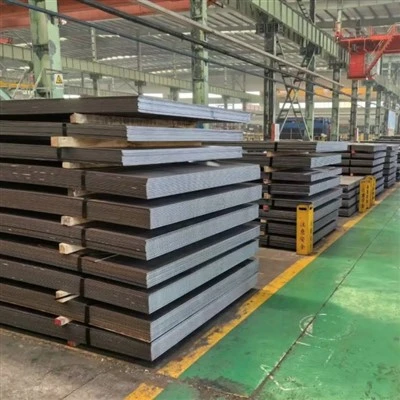
Carbon Structural Steel
Grade: For example, Q235-A·F indicates σs = 235 MPa.
Grade Notes: Q represents yield strength, A represents quality grade (available in four grades: A, B, C, and D), and F represents rimmed steel.
Features: Low price, excellent processability (such as weldability and cold formability).
Applications: General engineering structures and common mechanical parts. For example, Q235 can be used to make bolts, nuts, pins, hooks, and less important mechanical parts, as well as threaded steel, sections, and rebar in building structures.
High-Quality Carbon Structural Steel
Grades: For example, 45, 65Mn, and 08F.
Grade Notes: Directly indicates the metal's carbon content in parts per ten thousand.
Applications: Non-alloy steel used in the manufacture of critical mechanical parts, generally requiring heat treatment before use. Common Steel Grades and Applications: 08F, low carbon mass fraction, good plasticity, low strength, used for stamped parts such as automotive and instrument housings;
20, good plasticity and weldability, used for parts with low strength requirements and carburized parts, such as engine hoods, welded containers, small shafts, nuts, washers, and carburized gears;
45, 40Mn, excellent overall mechanical properties after quenching and tempering, used for mechanical parts subject to high loads, such as gears, connecting rods, and machine tool spindles;
60, 65Mn steels offer high strength; used in the manufacture of various springs, locomotive wheel rims, and low-speed wheels.
Carbon Tool Steel
Grade: For example, T12 steel indicates a carbon tool steel with Wc = 1.2%.
Grade Note: T plus the metal's carbon content in thousandths.
Features: Eutectoid and hypereutectoid steels, with high strength, hardness, and wear resistance, suitable for the manufacture of various low-speed cutting tools.