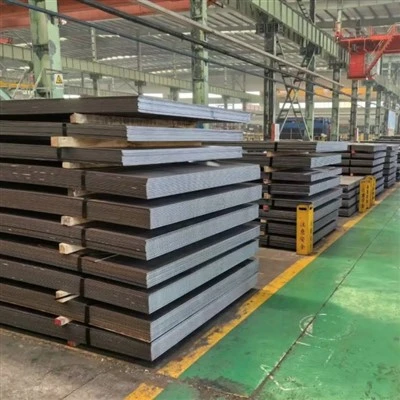
The stainless steel fabrication process encompasses material preparation, forming, welding, surface treatment, and quality inspection. Each step requires the appropriate process based on product requirements.
Material Preparation: Material Selection and Cutting
Material Selection: Select the type of stainless steel based on the product's operating environment (such as corrosiveness and temperature). For example, food equipment requires 304 or 316L (low-carbon grades to avoid carbide precipitation during welding, which reduces corrosion resistance); marine environments require 316L or duplex stainless steel.
Cutting: Cutting is performed using laser cutting, water jet cutting, or shearing. Laser cutting is the preferred cutting method for precision stainless steel products due to its minimal heat-affected zone and high edge quality. Water jet cutting is suitable for thick plates or applications where thermal deformation is not a requirement.
Forming: Bending, Stretching, and Deep Drawing
Bending: Flat plates are bent into cylindrical, conical, or custom-shaped parts using a plate roll or press brake. For example, when manufacturing stainless steel water tanks, flat sheets are rolled into cylinders and welded with longitudinal seams. Press brakes are used to create L-shaped and U-shaped angle steel pieces.
Stretching: Using dies, flat sheets are stretched into deep-cavity shapes like cups and boxes. For example, when manufacturing stainless steel thermoses, the flat sheet is gradually stretched into the cup body through multiple stretching steps. The reduction rate at each stretching step must be controlled within 15%-20% to avoid cracking.
Deep drawing: For complex, deep-cavity pieces, such as stainless steel cookware, a hydraulic press is used in conjunction with a deep-drawing die. Lubricants (such as mineral oil or water-based lubricants) are used during deep drawing to reduce friction and prevent cracking.
Welding: A key technology for joining and sealing
Stainless steel welding requires addressing corrosion resistance, deformation control, and weld aesthetics. Common methods include:
TIG welding (argon arc welding): Suitable for thin sheets (0.5-3mm) and precision welding, such as in food equipment and medical devices. TIG welding uses a non-consumable tungsten rod to generate an arc, and a filler wire (such as 308L or 316L) to create a beautiful weld seam with high corrosion resistance.
MIG welding (gas shielded welding): Suitable for medium-thick plates (3-12mm), it is more efficient than TIG welding. MIG welding uses a continuous wire feed to generate the arc, and a commonly used gas is an argon-CO2 mixture, enabling high-speed welding.
Spot welding: Suitable for assembling thin plates, such as stainless steel cabinets and elevator door panels. Spot welding uses pressure from electrodes and current to melt the contact points, forming a weld. While efficient, it also reduces weld strength.
Laser welding: Suitable for precision welding or joining dissimilar materials, such as stainless steel to aluminum. Laser welding offers a small heat-affected zone and minimal deformation, but the equipment cost is high.
Surface Treatment: Enhances Aesthetics and Functionality
Stainless steel surface treatment must balance corrosion resistance, aesthetics, and functionality. Common methods include:
Polishing: Mechanical polishing (sandpaper, buffing wheel) or chemical polishing (acid pickling) is used to achieve a mirror-like finish. This is suitable for decorative items and tableware. For example, the surface roughness of a stainless steel sink should be controlled to Ra ≤ 0.8μm to reduce dirt adhesion.
Brushing: Using a sanding belt or wire brush to create a fine texture on the surface increases friction and hides scratches. This is suitable for elevator door panels and appliance housings. The brushing direction should align with the direction of use of the product to avoid visual distraction.
Electroplating: Chrome, nickel, or titanium is applied to the surface of stainless steel to enhance corrosion resistance and decorative properties. For example, stainless steel bathroom accessories are often chrome-plated to enhance their gloss, while medical devices are nickel-plated to reduce allergic reactions.
Sandblasting: Sand particles are applied to the surface using a high-pressure airflow, creating a matte finish. This is suitable for industrial equipment and building curtain walls. Sandblasting can conceal weld marks and enhance the overall texture.
Quality Inspection: Comprehensive Control from Raw Materials to Finished Product
Stainless steel production requires numerous tests to ensure quality, including:
Chemical Composition Analysis: Spectrometers are used to measure the content of elements such as chromium, nickel, and molybdenum to ensure compliance with standards (e.g., 304 stainless steel must contain ≥18% chromium and ≥8% nickel).
Mechanical Properties Testing: Tensile testing machines are used to measure tensile strength, yield strength, and elongation to ensure compliance with operational requirements (e.g., 304 stainless steel must have a tensile strength of ≥520 MPa).
Corrosion Resistance Testing: Salt spray testing (NSS) or cyclic corrosion testing (CCT) simulate harsh environments to test the stability of the surface passivation film. For example, 316 stainless steel must pass a 480-hour salt spray test to show no rust.
Nondestructive Testing: X-ray, ultrasonic, or penetrant testing is used to detect internal defects (e.g., pores and cracks) in welds to ensure weld quality. For example, 100% of stainless steel welds in pressure vessels must undergo X-ray testing.